Salary Coming Late? How UAE Residents Handle the Gap Before Payday
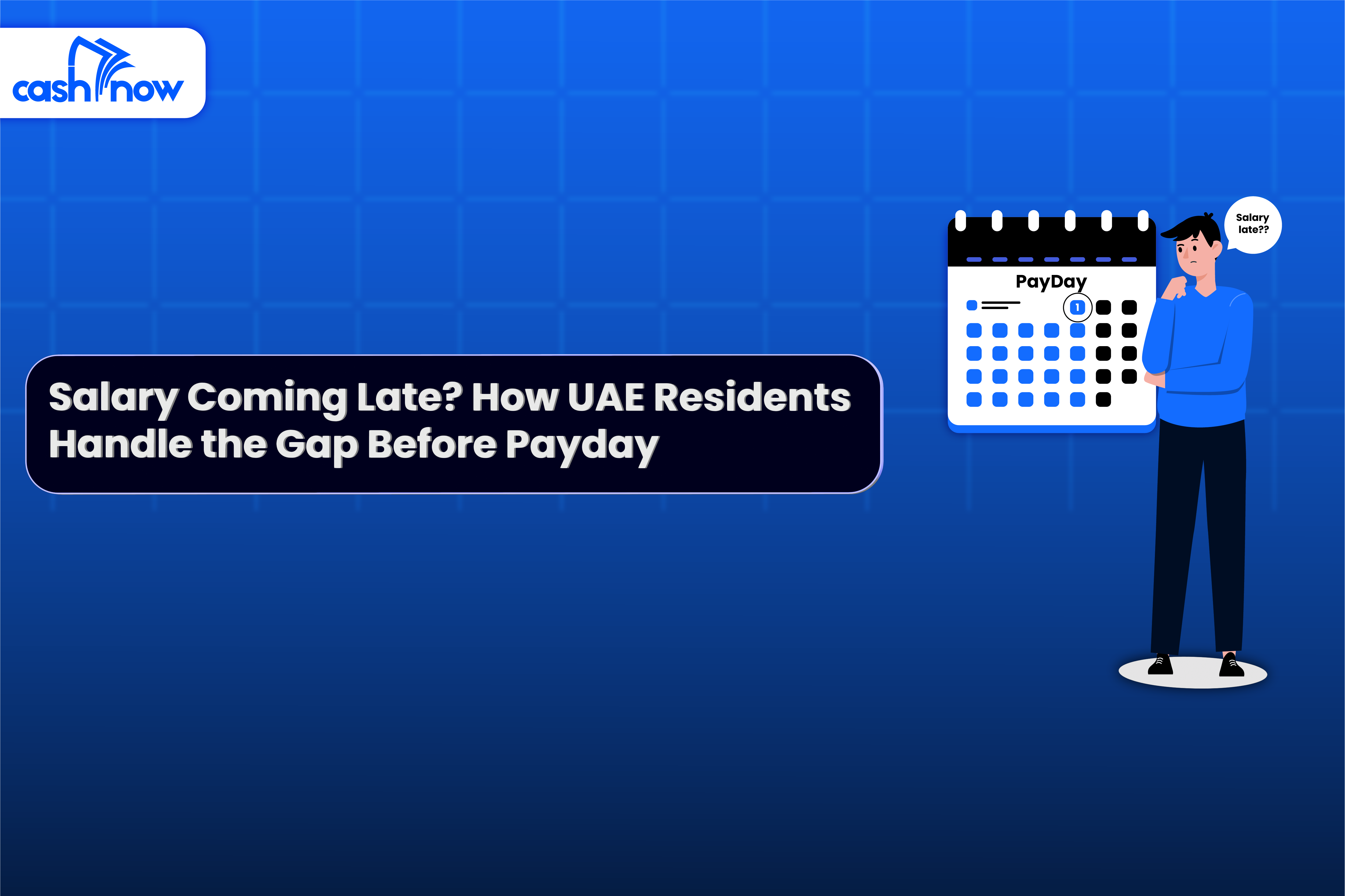
For many residents in the UAE, monthly salaries follow a predictable cycle. Bills, transfers, savings, and daily spending are usually planned around a specific payday. So when salary arrives later than expected - even by a few days, it can disrupt financial planning quickly.
This situation is especially stressful for expats and workers managing tight monthly cash flow, family responsibilities, or fixed payment schedules. While delayed salaries are not always long-term problems, the temporary gap before payday can still create real pressure.
Why Salaries Sometimes Come Late in the UAE
Here are some of the reasons salaries get delayed every now and then in the UAE:
1. Payroll Processing Delays
In some companies, salary processing may get delayed due to payroll approvals, banking timelines, accounting processes, public holidays and system-related issues. Even short administrative delays can affect employees who rely heavily on fixed payday timing.
2. Business Cash Flow Challenges
Some industries experience temporary cash flow fluctuations based on client payments, project cycles, seasonal demand or delayed receivables. In these situations, salary timelines may shift temporarily while businesses stabilize payments.
3. Bank Transfer or WPS Timing Issues
At times, salaries are processed by employers but delayed due to WPS processing timelines, bank verification delays, transfer timing cutoffs or just weekends/ holidays. This often creates uncertainty because employees know salary is “coming,” but not exactly when it will reflect in the account.
How UAE Residents Handle the Gap Before Payday
Here’s how residents in the UAE handle payday gaps:
1. They Shift Into “Cash Preservation Mode”
One interesting behavioral pattern during salary delays is that people stop thinking monthly and start thinking daily. Instead of “how much can I spend this month” the mindset becomes “how long can this amount last?”
Workers begin delaying optional spending, protecting available cash, calculating daily usage mentally and avoiding purchases that reduce flexibility. This psychological shift happens quickly when payday timing becomes uncertain.
2. They Protect Liquidity Instead of Paying Everything Immediately
When salary is delayed, many residents avoid exhausting all available money at once. Instead of clearing every pending payment immediately, they focus on maintaining enough liquidity to stay flexible over the next few days.
This means people often stagger payments carefully, delay lower-priority transactions, preserve accessible cash and avoid draining accounts completely. Maintaining liquidity becomes more important than appearing “fully paid up.”
3. They Temporarily Reduce “Invisible Spending”
A lot of month-end financial pressure comes from spending that normally goes unnoticed. During salary delays, many workers become highly aware of convenience spending, delivery charges, app subscriptions, impulse purchases and repeated small transactions.
These expenses may individually seem small but collectively reduce financial flexibility significantly during short payday gaps. Instead of drastic budgeting, many residents simply cut invisible spending temporarily until salary arrives.
4. They Prioritize Stability Over Lifestyle
When salary comes late, most residents naturally shift focus from comfort to stability. The goal becomes maintaining routine, avoiding disruption and staying financially functional until payday.
This often means avoiding unnecessary financial risks, postponing lifestyle spending, keeping emergency funds untouched if possible and protecting access to transport, communication, and work.
5. They Use Short-Term Financial Flexibility Strategically
Many UAE residents no longer view short-term financial support as something used only during major emergencies. Instead, some workers use regulated instant cash solutions during salary timing gaps, temporary cash shortages and delayed payroll periods.
Platforms like CashNow are designed to help residents access temporary financial flexibility quickly through:
- minimal paperwork
- Emirates ID verification
- digital applications
- faster approvals
6. They Avoid Panic Borrowing
One major difference between financially stable workers and financially stressed workers during salary delays is how they react emotionally. Many residents consciously avoid borrowing impulsively, taking multiple loans, using unlicensed lenders and making emotional financial decisions.
Instead, they focus on temporary adjustments, structured financial support, controlled spending, short-term planning.
7. They Learn to Build Small Payday Buffers Over Time
Interestingly, repeated salary delays often change how people manage money long term. Many UAE residents eventually start keeping small backup cash reserves, separating emergency money from spending money, planning for delayed salary scenarios and building mini payday buffers.
The goal is not building massive savings immediately. Instead, it is creating enough financial breathing room so that a few delayed days do not create panic every month.
For many workers, this becomes one of the most important long-term financial habits they develop while living in the UAE.
Best Practices to Follow for Managing the Gap Before Payday
- Avoid exhausting your entire salary within the first two weeks of the month, even during financially comfortable periods.
- Try maintaining a small “before payday” cash buffer that can help cover short-term delays or unexpected timing gaps.
- Keep your essential spending separate from discretionary spending so you know exactly how much flexibility you actually have near month-end.
- Avoid scheduling all major payments on the exact expected salary date whenever possible, especially if payroll timing tends to fluctuate.
- Reduce dependence on convenience spending such as delivery apps, impulse purchases, and unnecessary subscriptions during tighter financial periods.
- Track your available cash based on how many days remain until payday instead of only looking at your total account balance.
- Keep at least one payment method or emergency financial backup available for temporary salary delays or urgent situations.
- If you need short-term financial support, choose regulated and transparent solutions instead of informal borrowing or unverified lenders.
- Communicate early with service providers or landlords if delayed salary timing may affect upcoming payments rather than waiting until deadlines are missed.
- Build financial habits around flexibility and cash flow timing, not just income amount, since even temporary salary delays can affect day-to-day stability.
Conclusion
Salary delays can happen for many reasons, even in stable work environments. The important thing is handling the gap before payday calmly, protecting financial flexibility, and avoiding rushed financial decisions during temporary uncertainty.
If you need short-term financial support before payday, download the CashNow app and access instant cash in minutes using just your Emirates ID.
Similar Content