How Much Cash Do You Need When Moving to the UAE as a New Expat?

The first few weeks after moving to the UAE can be challenging. You need to cover several upfront, one-time, and recurring expenses, even before you start earning.
The amount of cash you need depends on your situation. Your costs may be lower if your employer provides accommodation, transport, or pays for some relocation expenses. Your salary date also matters, especially if you need to wait several weeks for your first payment.
This guide explains the main costs to plan for before and after you arrive in the UAE.
How Much Cash Should a New Expat Have When Moving to the UAE?
Here are the main factors that determine how much money you need to plan for when moving to the UAE:
1. Housing and Accommodation Costs
Housing is the biggest part of your moving budget in the UAE. Rent is not the only cost you need to consider. The following expenses can add to the total amount you need to pay upfront:
Temporary Accommodation
When you arrive in the UAE, you need temporary accommodation. This could be a hotel, serviced apartment, or short-term rental. The longer you take to find a permanent home, the more you may spend on temporary accommodation, so include this cost in your budget.
Security Deposit and Initial Rent
Another housing expense is the security deposit and first rent payment. In the UAE, rent may be paid in one or more cheques, depending on the rental agreement. More cheques can spread your rent payments across the year and reduce the upfront amount.
Do not spend most of your available cash on rent and the security deposit. Keep enough money for food, transport, bills, and other essentials.
Agency and Other Rental Costs
If you use a real estate agent, you may also have to pay an agency fee. You may have other costs related to setting up your rental, such as Ejari registration and other required charges.
Need an instant loan? Download the CashNow app today.
2. Transportation Costs
Transportation costs include more than your daily commute. You may spend more during your first few weeks as you explore the area and settle into a regular routine.
Getting Around Before You Settle
You will need to travel often when looking for permanent accommodation and getting familiar with your area. You will have to rely on taxis or ride-hailing services during this time, so keep some money aside for transport.
Setting Up Your Regular Commute
Once you know where you live and work, you can estimate your regular transport costs. These may include metro or bus fares, taxis, or the costs of owning a car, such as fuel, insurance, parking, registration, and maintenance.
3. Food and Everyday Living Expenses
Food and everyday needs can add up quickly when you are settling into a new country. You may need to buy several essentials at the same time, so include them in your starting budget.
Food and Groceries
You will need money for groceries, meals, snacks, and drinking water. You may also eat out more often while you are settling in, which can increase your food costs.
Mobile Phone and Internet
You may need to buy a local SIM card and mobile plan after arriving. If internet is not included in your accommodation, you may also need to pay for an internet connection.
Toiletries and Personal Essentials
Keep some money aside for basic items such as soap, shampoo, toothpaste, medicines, clothes, and other personal needs. You may also need to buy household items when you move into a new place.
Plan for these small daily expenses for at least the first month or two, rather than assuming your first salary will cover everything.
4. Setting Up Your New Home
Once you move into your permanent home, you may have some additional setup costs. Plan for the basic items you need to start your daily routine.
Furniture and Basic Household Items
If your home is not fully furnished, you may need items such as a bed, table, chairs, curtains, or storage. Even in a furnished home, you may need cleaning supplies, buckets, and other basic items.
Kitchen Essentials
You may need basic kitchen items such as plates, cups, spoons, pans, and containers. If you cook at home, you may also need a few small appliances.
Bedding, Appliances and Other Necessities
Bedding, towels, a kettle, an iron, and other essentials can add to your starting costs. You do not need to buy everything at once. Start with what you need every day and add other items later.
Need an instant loan? Download the CashNow app today.
5. Visa, Documentation and Other Setup Costs
Moving to the UAE may involve costs for visas, medical tests, document attestation, translations, and other paperwork. These costs depend on your job, visa type, and personal situation.
Visa and Emirates ID Costs
Visa processing and Emirates ID-related costs also apply. Depending on your employment package, your employer may cover some of these costs.
Medical Tests and Document Costs
You may also need to pay for medical tests, document attestation, translations, or other required paperwork.
Before you travel, ask your employer which relocation and documentation costs they will cover. This helps you calculate how much you need to pay yourself.
6. Build an Emergency Buffer Before You Move
Your first salary may not arrive immediately after you start your job, so keep some money aside for essential and unexpected expenses during this period.
Keep Some Money Separate
Set aside an emergency buffer that you do not plan to use for rent, food, furniture, or other regular expenses. Keep it available for unexpected needs.
Why an Emergency Buffer Matters
You may face an unexpected medical cost, urgent travel, phone repair, or another sudden expense. You may also spend more than planned while settling in. An emergency buffer gives you some money to fall back on without using the savings set aside for your regular expenses.
If you still face a genuine short-term cash gap, you can also look at the financial options available to you. CashNow is one option for UAE residents who need short-term financial support. But if you consider a loan, check the fees and repayment terms and make sure you have a clear plan to repay it.
Need an instant loan? Download the CashNow app today.
7. Account for Money You'll Continue Sending Home
For many expats, sending money home is an important part of their monthly budget. If you support your family, this expense may start soon after you move to the UAE, even during your first month.
Include Remittances in Your Budget
Think about how much money you may need to send home and include it in your initial cash-flow plan. This helps you see how much money you will have left for your own expenses.
A Sample First-Month UAE Moving Budget
A simple budget can help you estimate how much money you may need during your first month in the UAE. The example below is for illustration only. Your actual costs will depend on your job, location, accommodation, and personal needs.
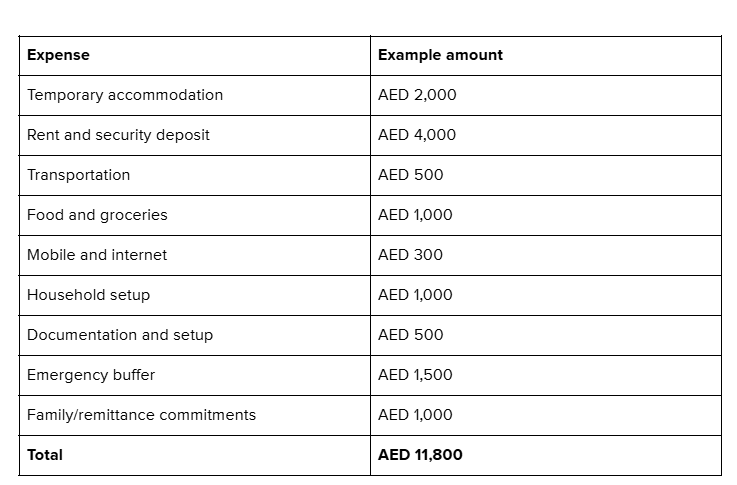
Use your expected costs to replace these amounts and create a budget that fits your situation. If your employer covers accommodation, transport, relocation, or documentation costs, remove those expenses from your estimate.
How to Calculate How Much Cash You Personally Need
Once you know your expected costs, you can calculate how much cash you need before moving to the UAE.
Step 1: Calculate Your Upfront Moving Costs
Add the costs you need to pay before or soon after arriving, such as:
- Housing and security deposit
- Initial rent
- Temporary accommodation
- Transportation
- Documentation
- Home setup
- Other essentials
Total upfront costs = AED ___
Step 2: Calculate Your Monthly Essential Expenses
Add your regular monthly costs, such as:
- Rent
- Food and groceries
- Transport
- Utilities
- Phone and internet
- Other regular commitments
Monthly essential expenses = AED ___
Step 3: Check When Your First Salary Will Arrive
Check your expected first salary date and calculate how many weeks or months you need to manage without your salary.
For example, if your essential expenses are AED 750 per week and you need to manage for 6 weeks:
AED 750 × 6 weeks = AED 4,500
Expenses until first salary = AED 4,500
Step 4: Add an Emergency Buffer
Set aside some money for unexpected expenses. Do not allocate every dirham to planned costs, as you may need extra money during your first few weeks.
Emergency buffer = AED ___
Step 5: Subtract What Your Employer Covers
Check which relocation costs your employer will cover, such as accommodation, flights, visa costs, insurance, or other expenses.
Employer-covered costs = AED ___
Step 6: Calculate Your Total Cash Needed
Now add everything together:
Upfront moving costs + expenses until first salary + emergency buffer - employer-covered costs = total cash needed
Conclusion
There is no fixed amount of cash every new expat needs when moving to the UAE. Your housing, daily expenses, employer support, and first salary date will all affect how much you need.
Plan your budget around these costs and keep some money aside for unexpected expenses. This can help you settle in without using all your savings.
If you still face a genuine cash gap, CashNow can provide short-term financial support. Make sure you borrow responsibly and choose an amount that you can comfortably repay.
Need an instant loan? Download the CashNow app today.
Similar Content